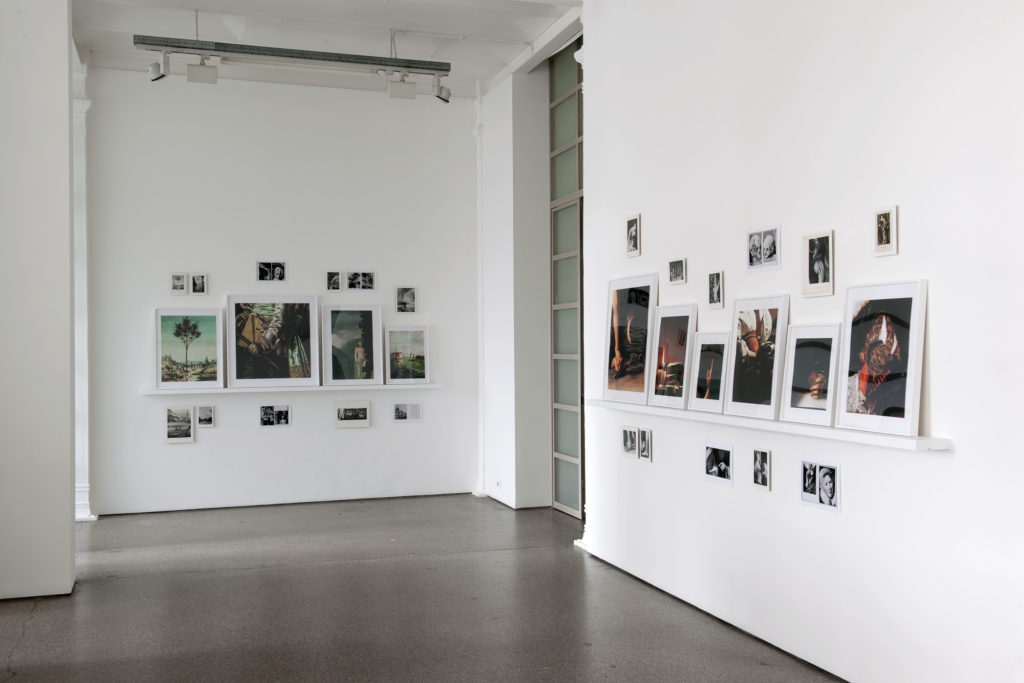




It had been commonly accepted in art history that details were of the utmost importance in the new élan that arose in 15th century painting, not least because of the exceptionally high quality of their technical execution. In 2001, however, David Hockney published his polemic The Secret Knowledge, in which he demolished the myth of the genius of the Renaissance painter by attributing the stylistic innovations to the painter’s use of optical devices such as mirrors and lenses. The investigation into early forms of photography in artistic creation, is what links Hockney’s research to Iñaki Bonillas’ work. Indeed, since the late 1990s the latter has been focusing on an analytical exploration of the medium of photography, its material reality and image production. (Détail) reads like a kind of photographic pre-history of photo-like images.
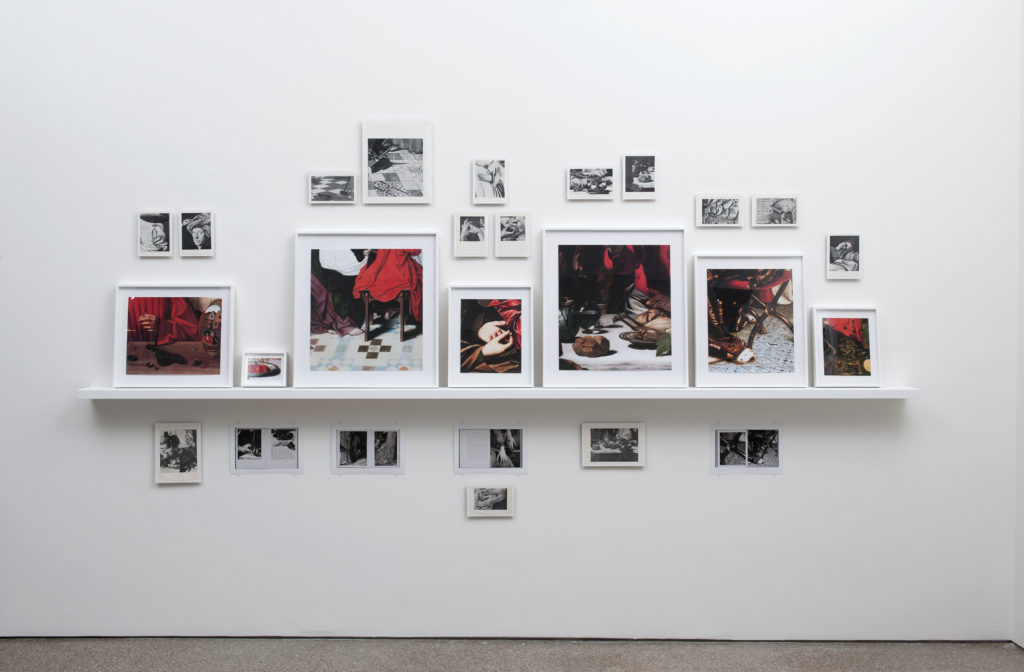
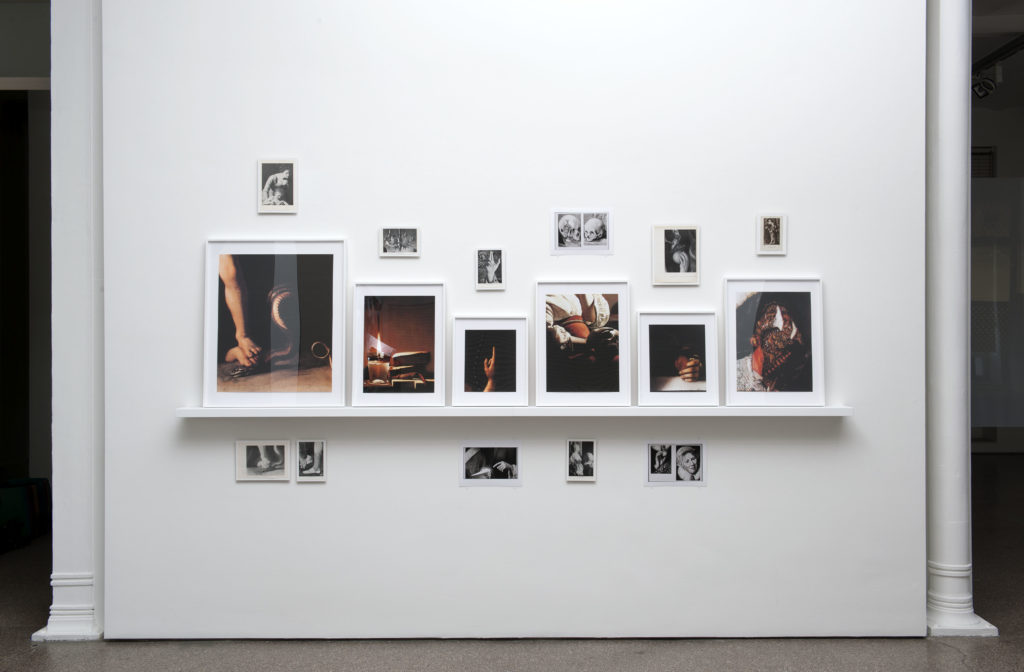
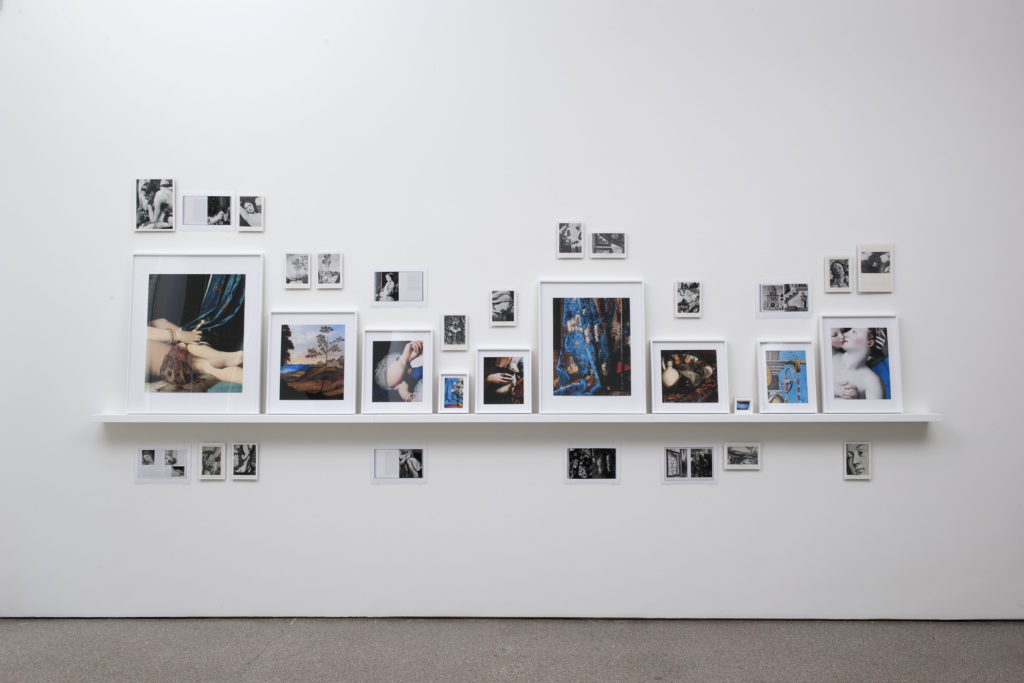
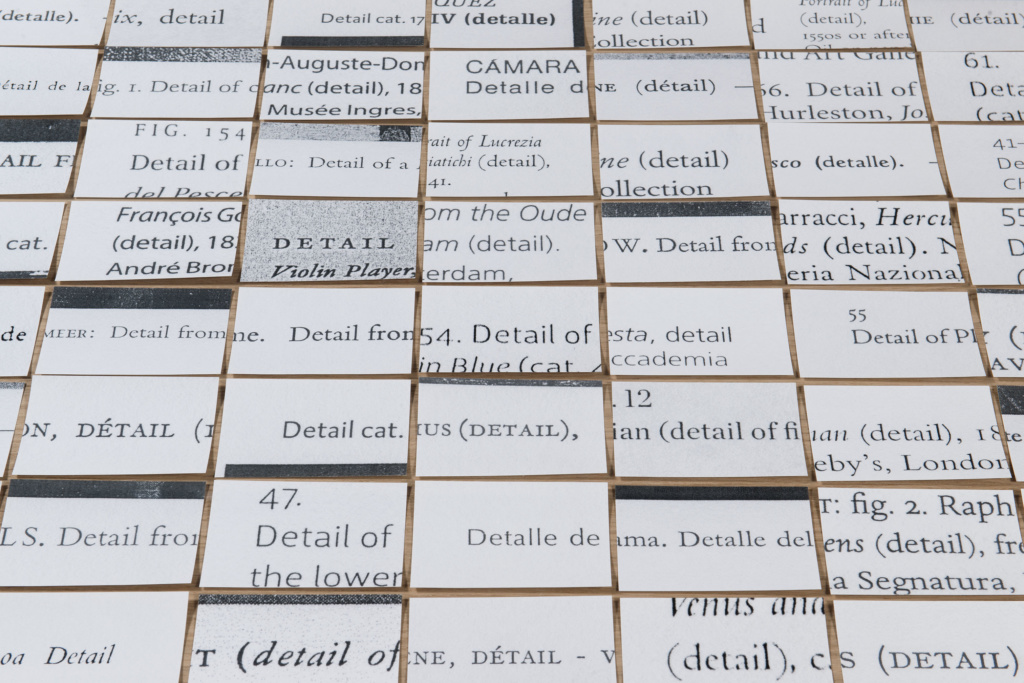
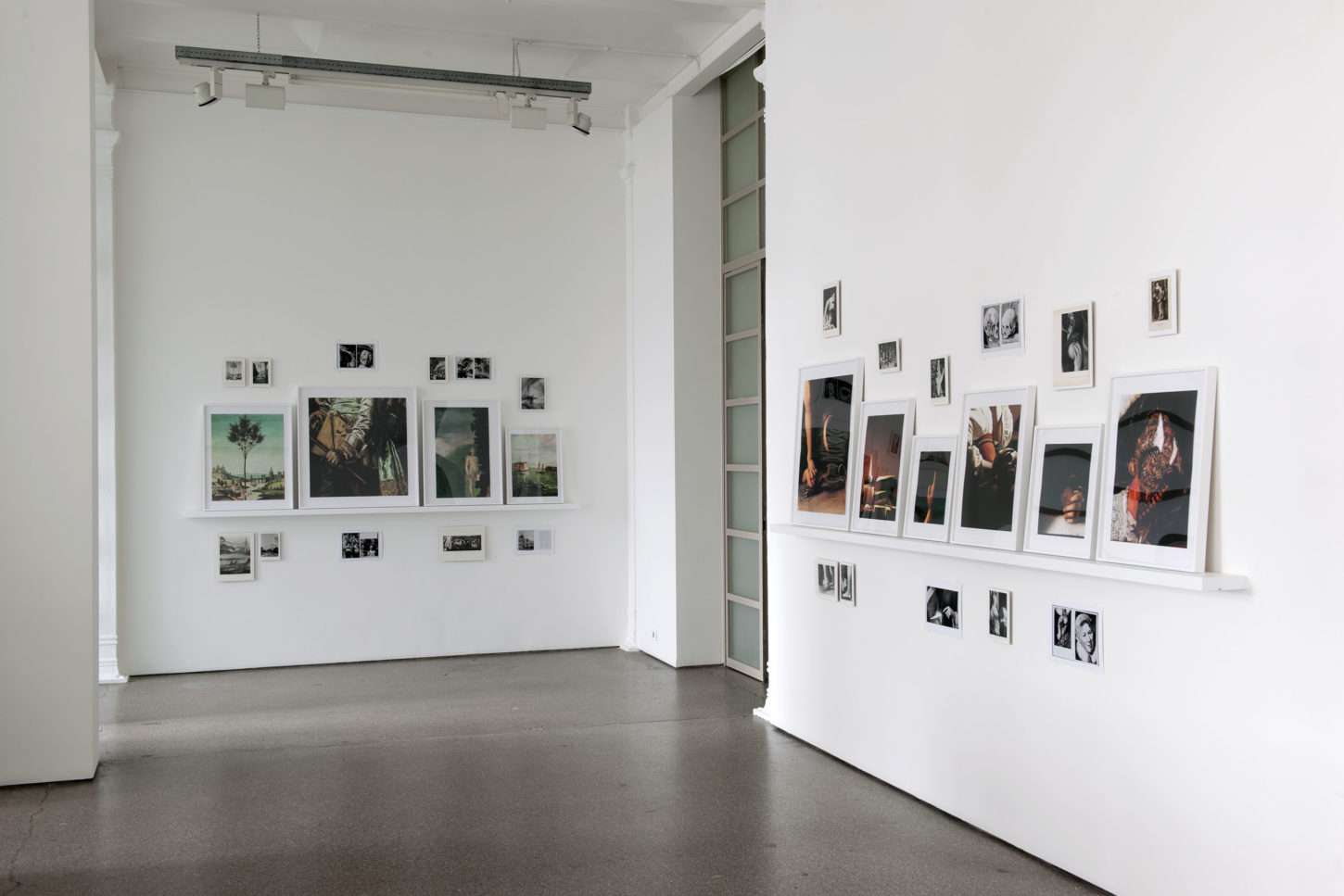
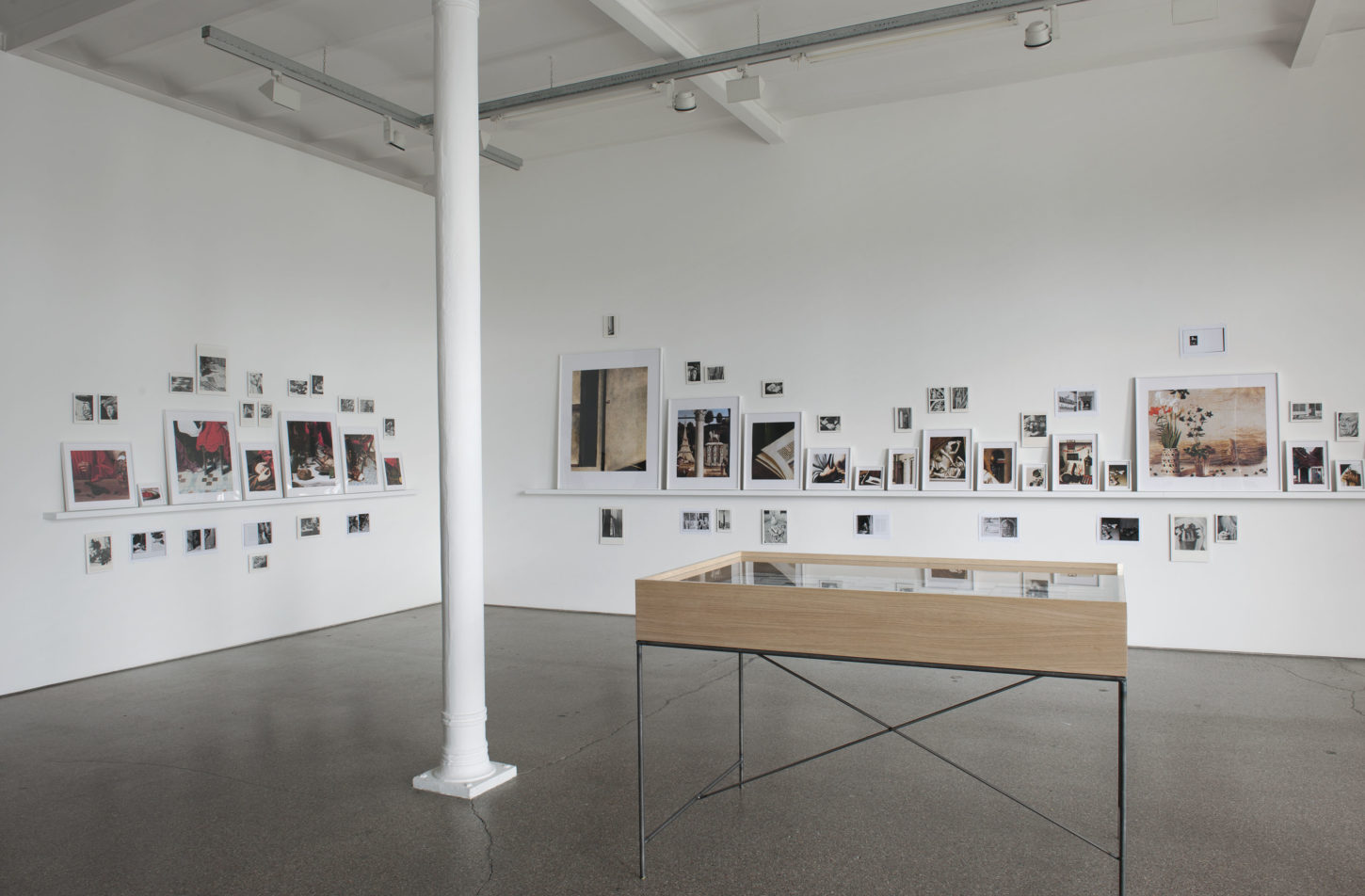
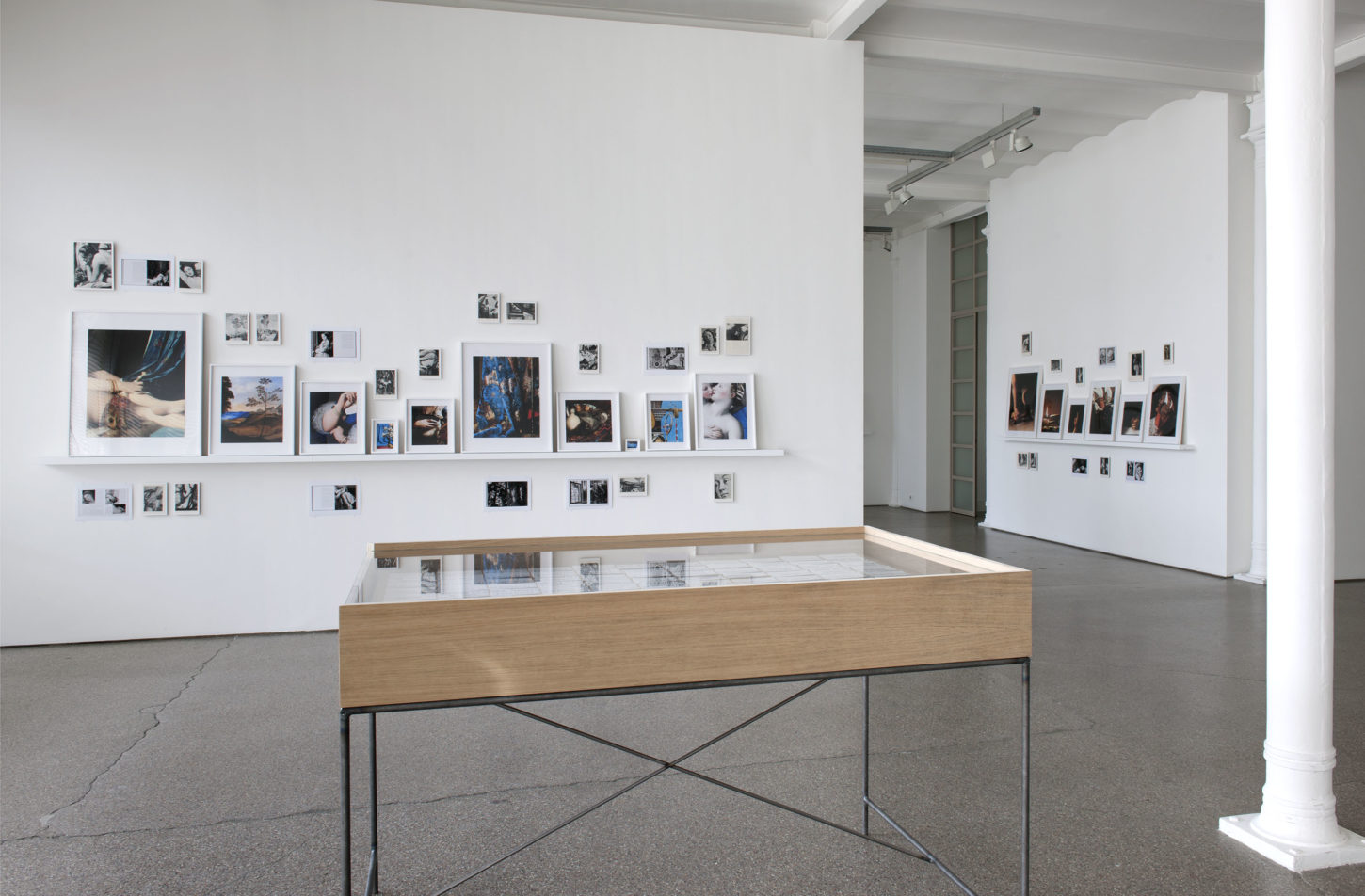
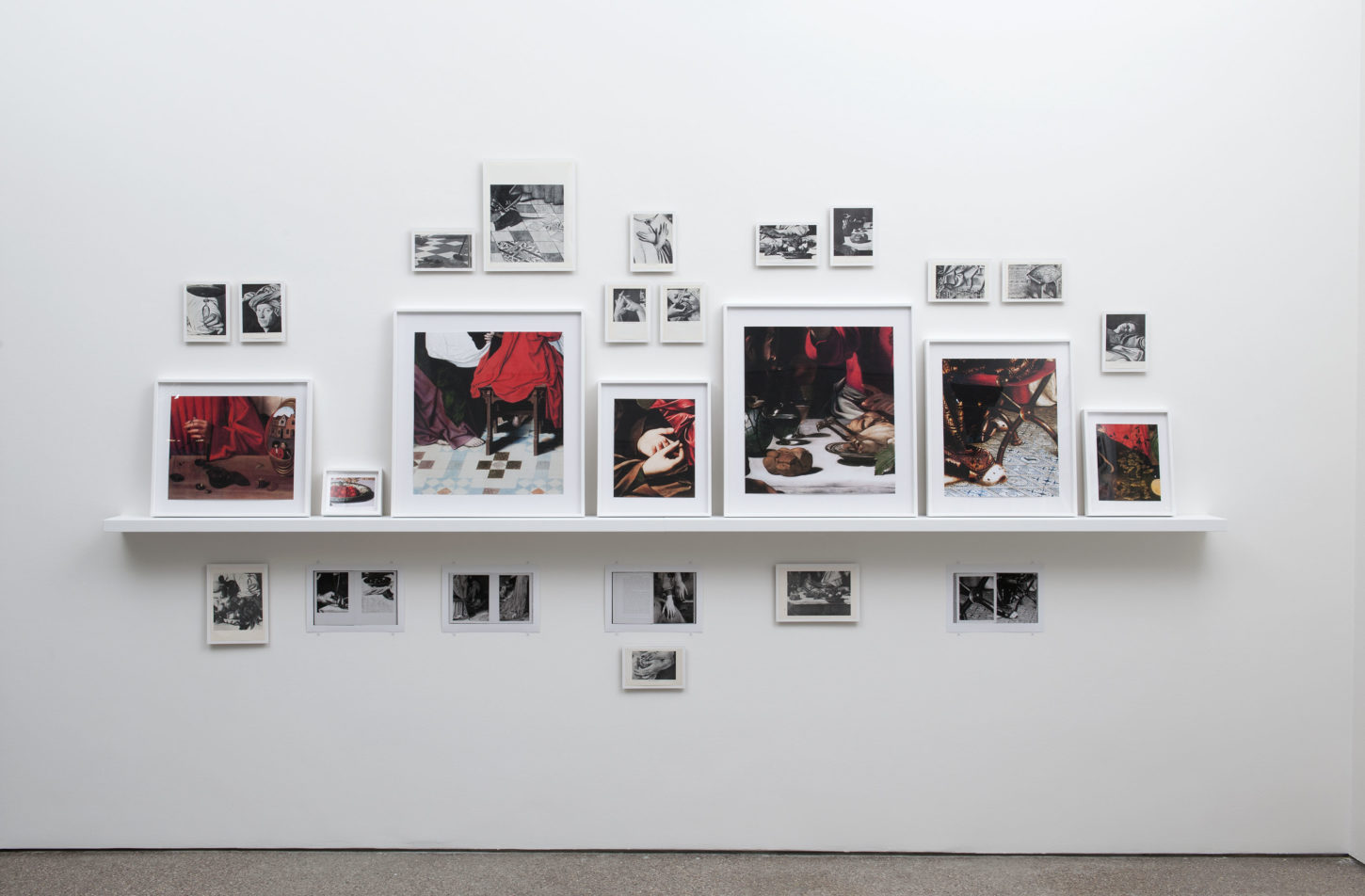
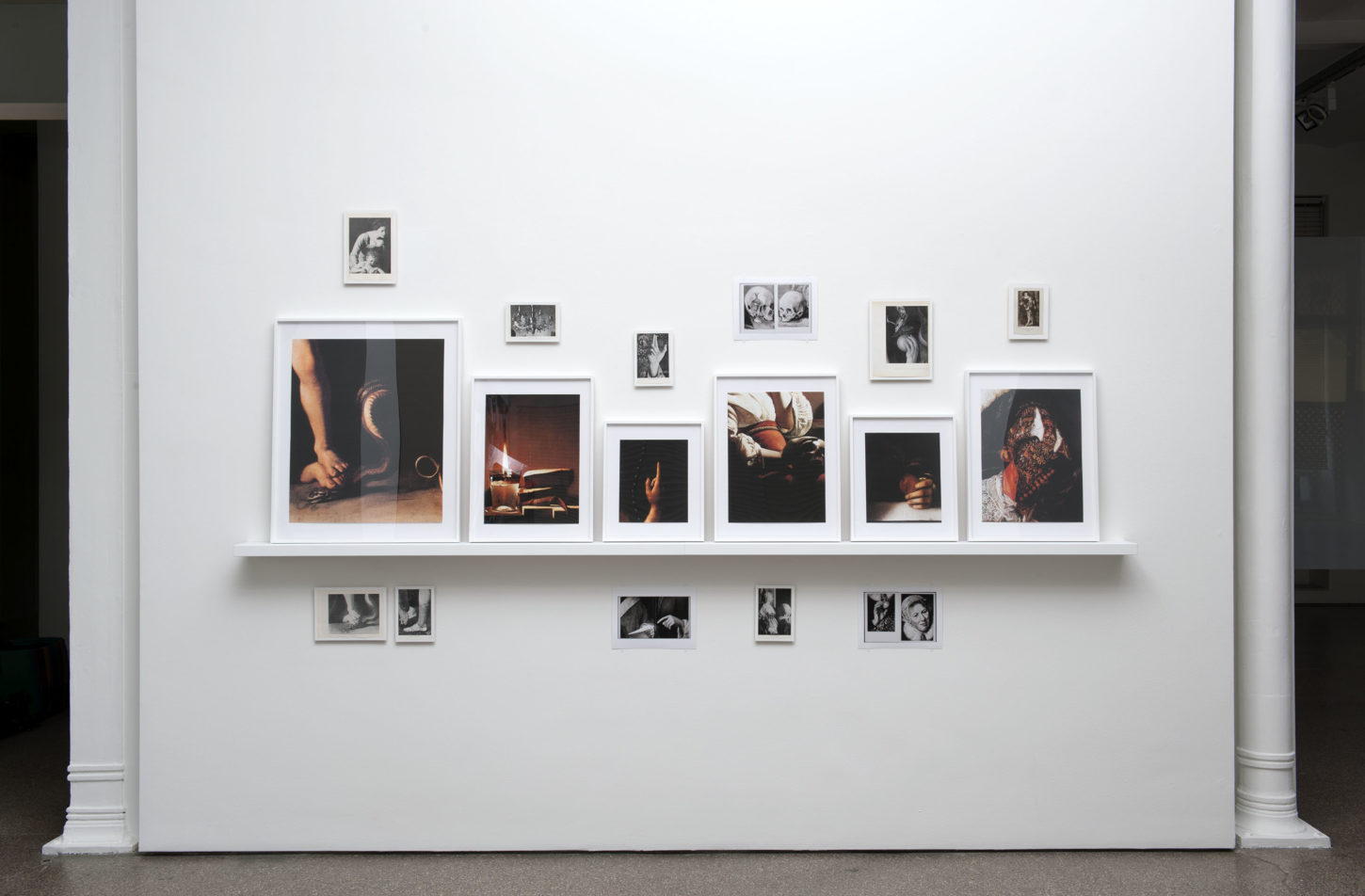
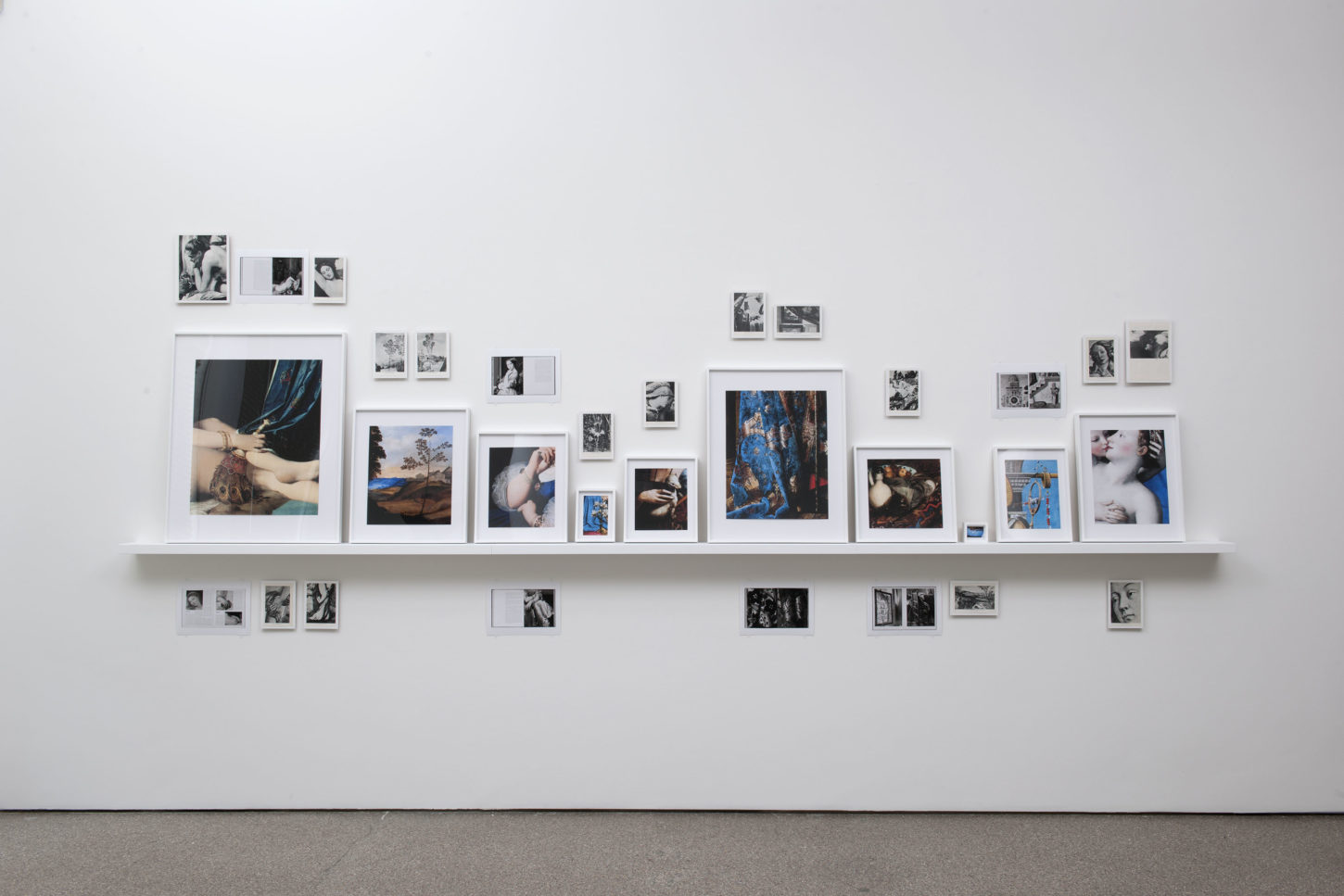
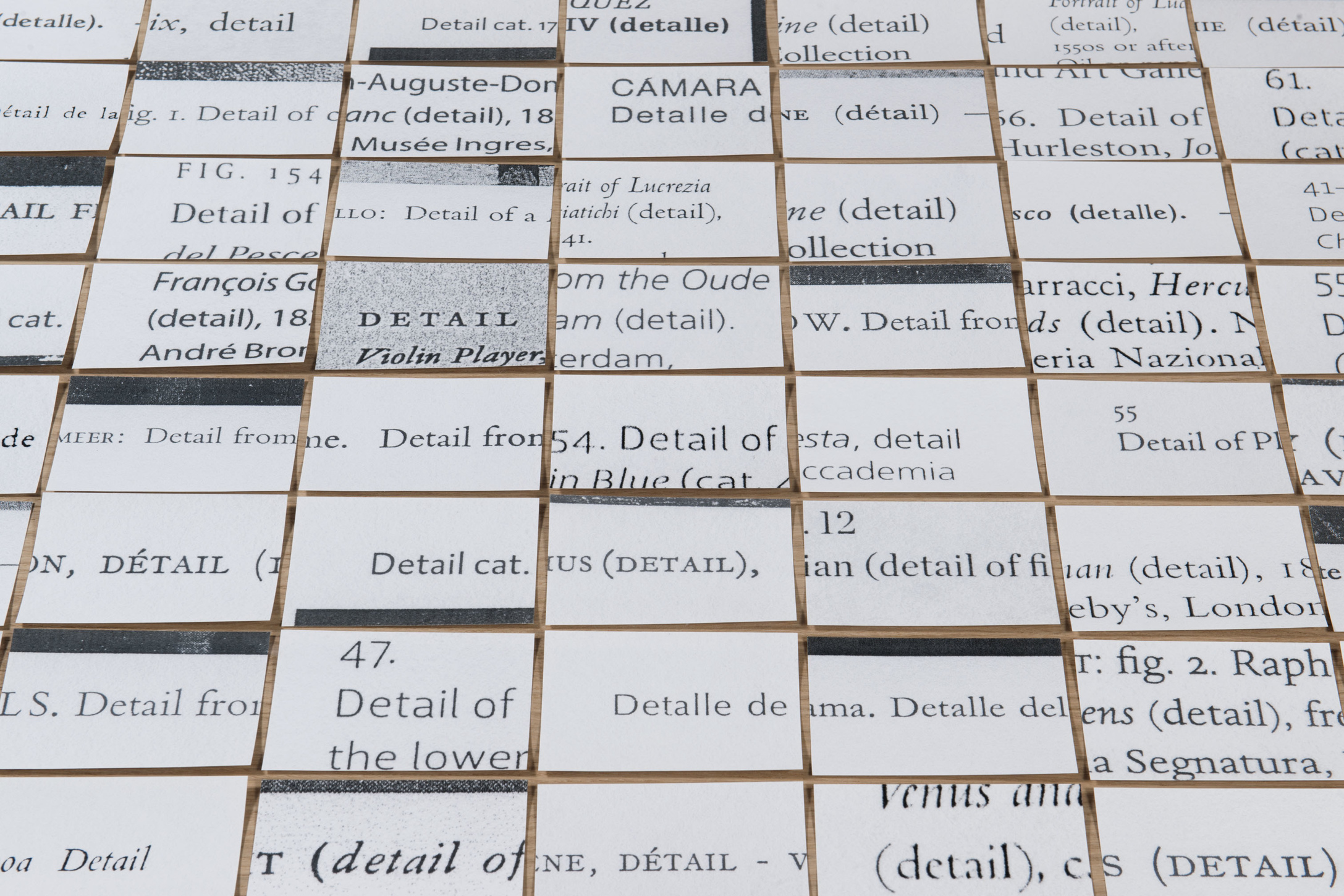
The five installations along the walls of the gallery space refer to the starting point of the exhibition: old art catalogues with masterpieces by Caravaggio, Van Eyck, Ingres, etc. This visual source material has been translated into a textual structure (line, footnote, header) in which photographic sources and reproductions have been arranged on different levels of information. At the center are details photographically reproduced by the artist and enlarged to a 1:1 scale of the original painting. At the bottom and on top, we find either original pages taken directly from books or photographs of double page spreads where two or more details appear.
The artist decided to maintain the color of the central details, because the chromatic “reality” in books is almost always altered, so that the images that are portrayed differ dramatically from the original. The idea was then to emphasize that quality by grouping the pictures by their main color. In doing this, Bonillas also took some inspiration from Aby Warburg and his Mnemosyne Atlas, where “visual clusters” served for illustrating one or several thematic areas. Only these are not ordered here according to the history of style, but rather through visual similarity. That is: relationships caused by an affinity either of color or of form (many times what relates one image to the other is a feature: for example, in both appears the same posture of the hands, or the same kind of landscape). At the end, it has to do with the old principle of “good company”.
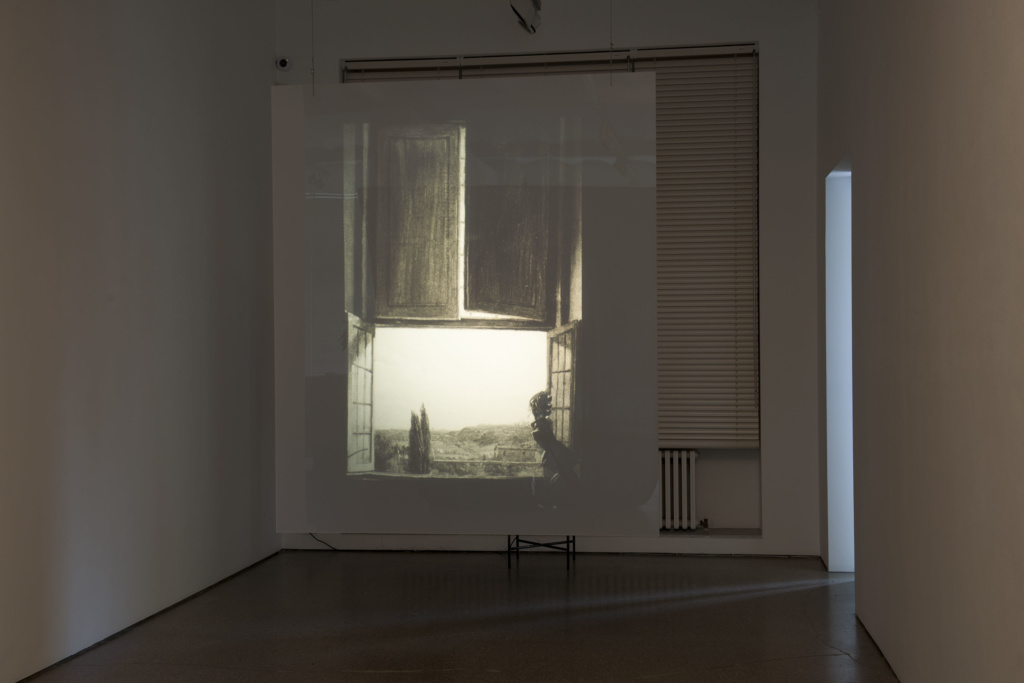
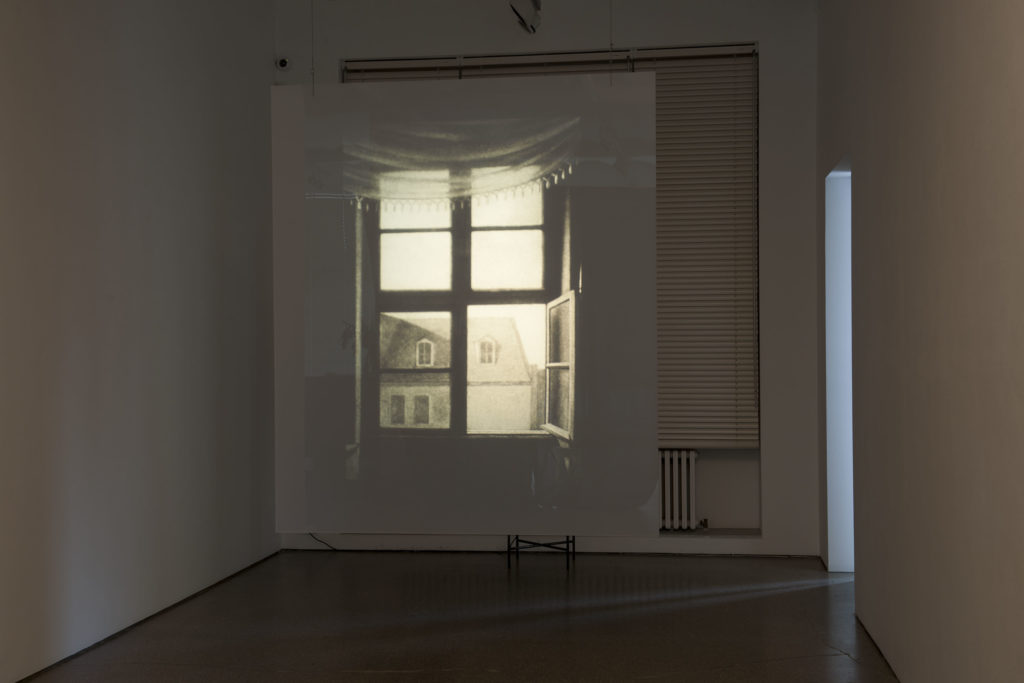
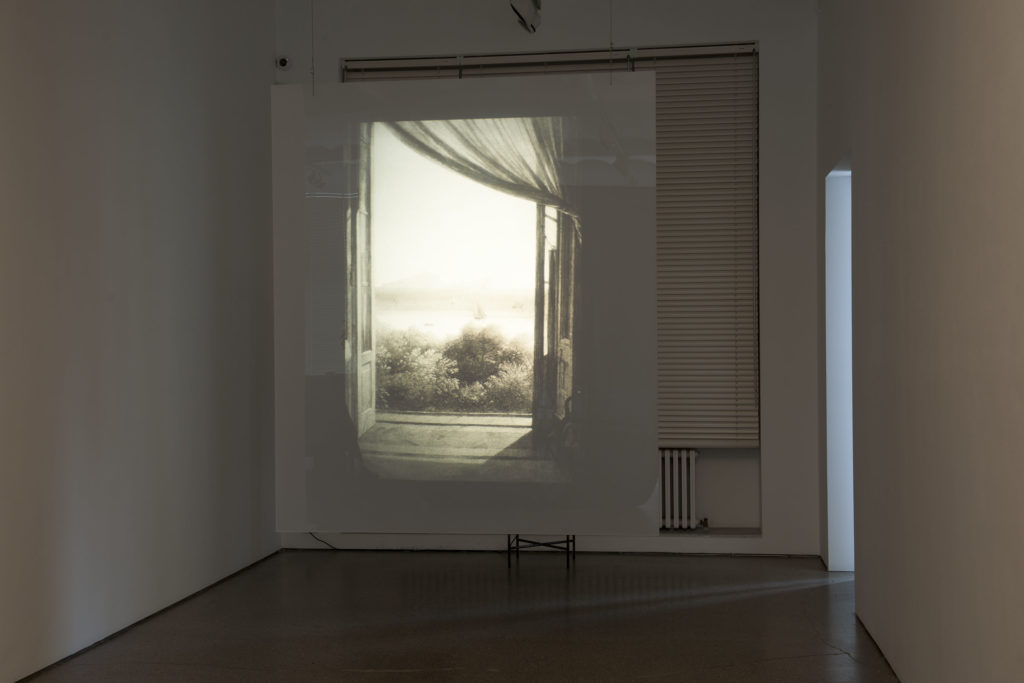
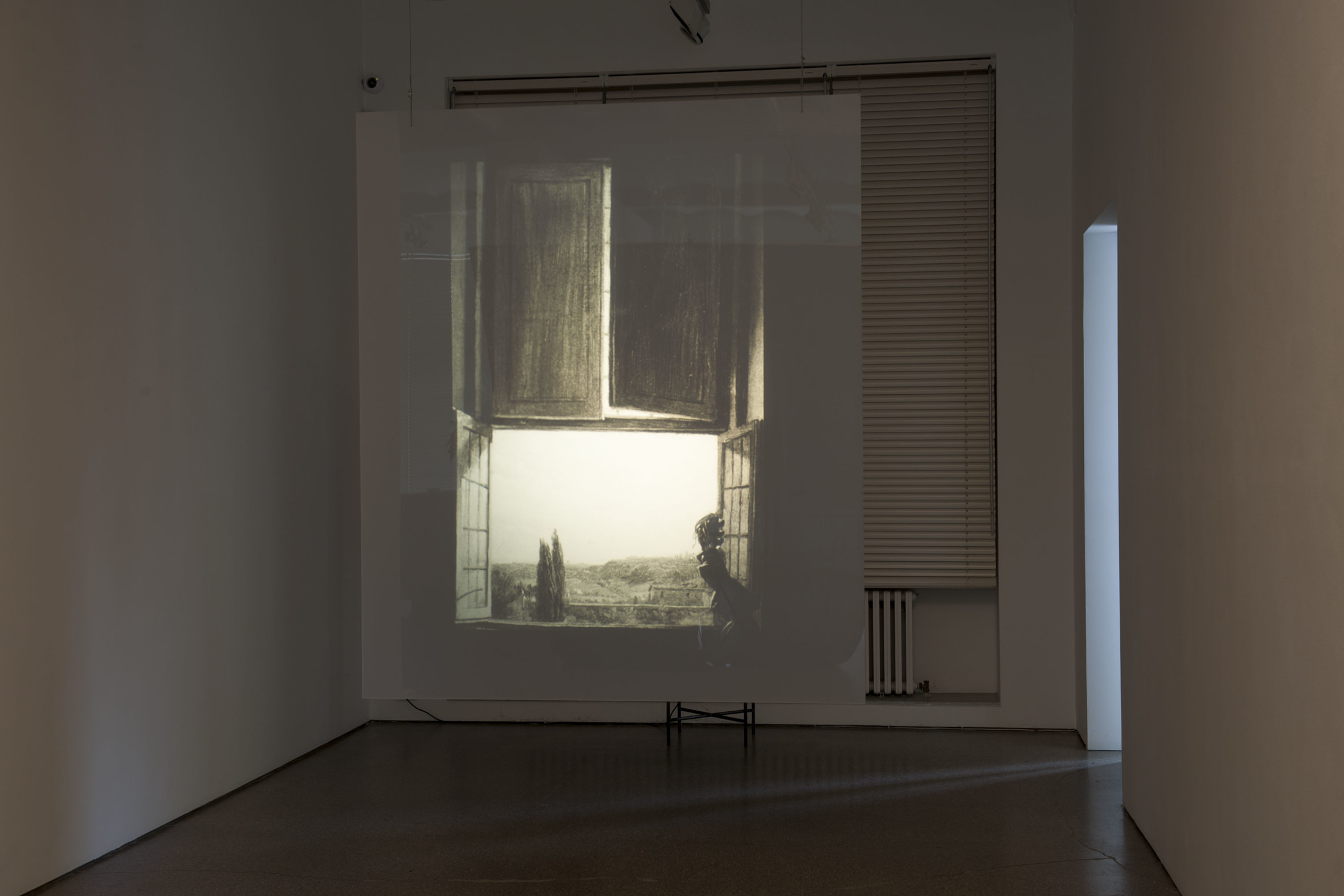
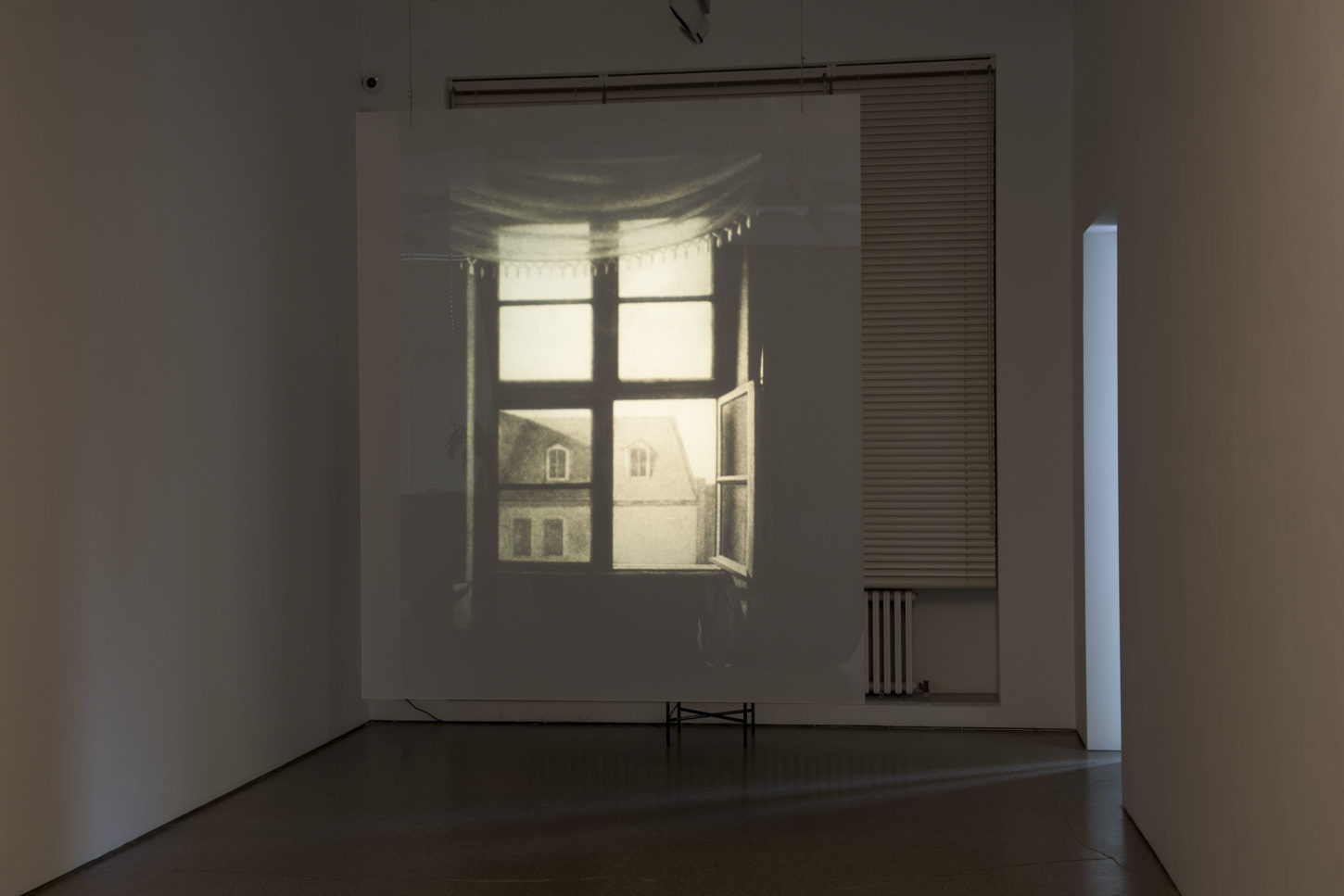
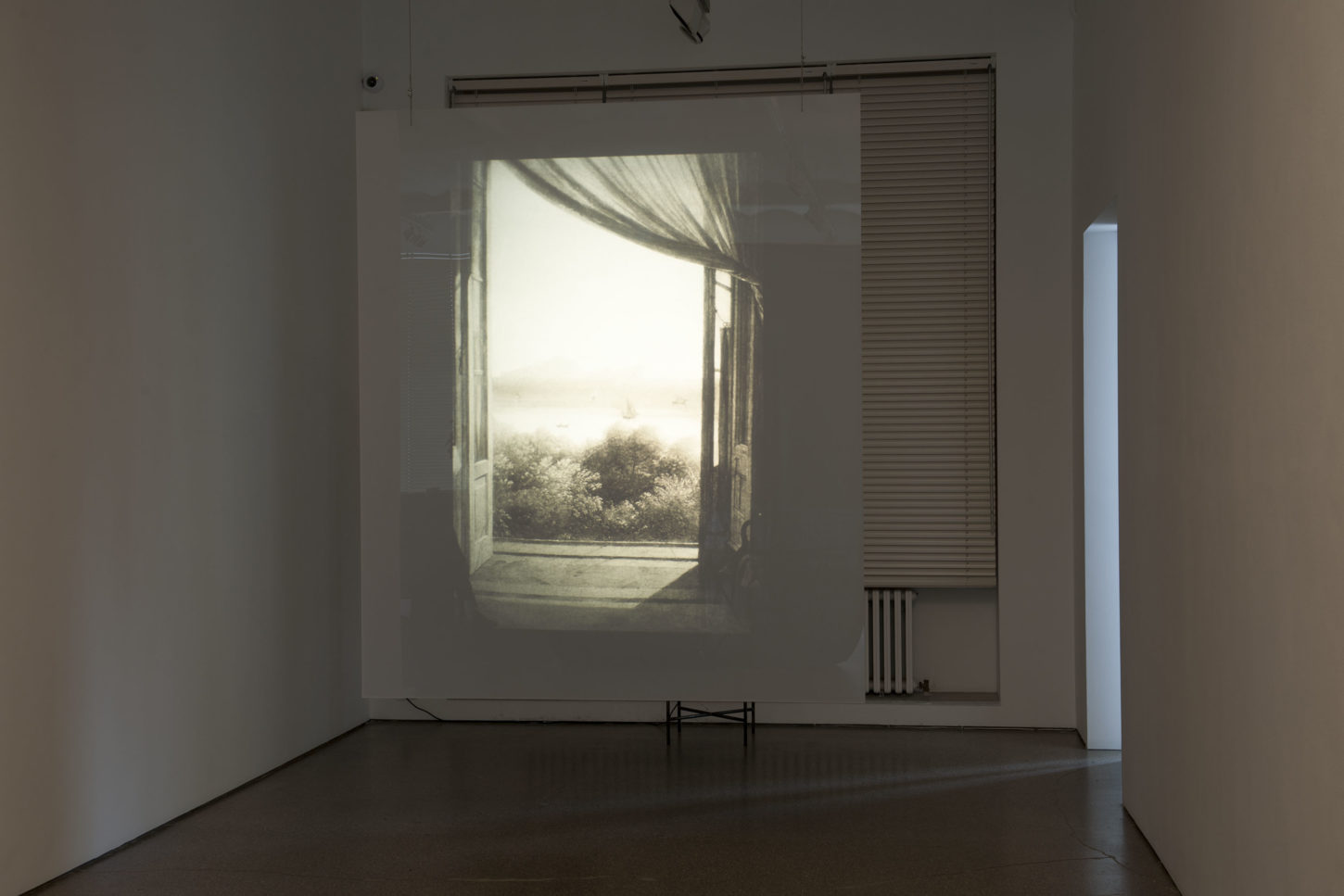
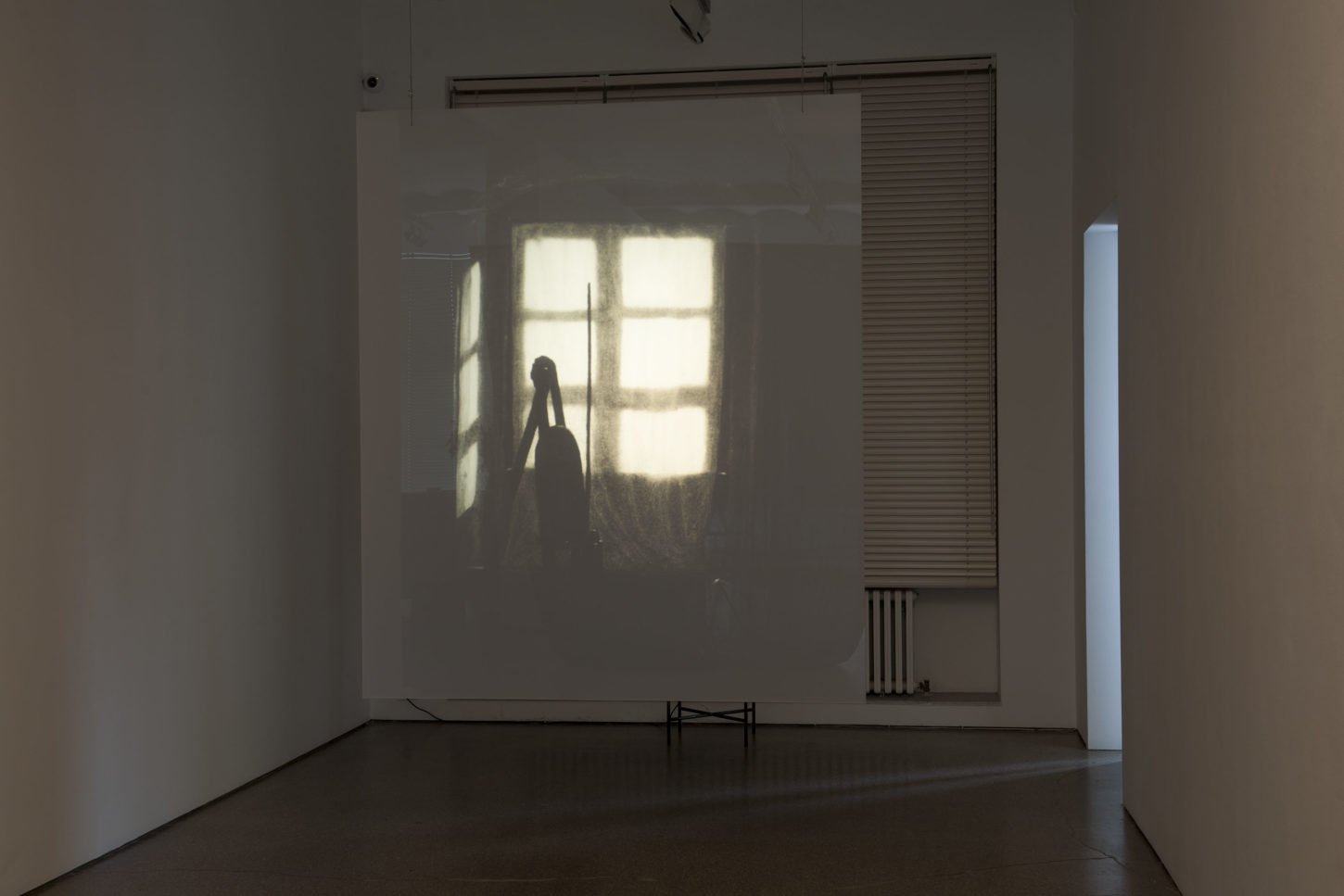
So, thinking again on a textual structure, color details would work here as text, and the rest of the images, kept in black and white, would be like footnotes and comments made on the side. With this, not only the idea of fragmentation is reinforced (since each image is just a part of a whole), but also is the notion of painting being reproduced incessantly, up to a point where we are about to no longer know how an original painting looks—because, paraphrasing T. S. Eliot, we “know only a heap of broken images” reproduced in a book. Through a projection on a transparent surface in the middle of the gallery space, lights enters as if through a window, and windows are also what the artist have chosen to project here, because they are already details in themselves, as paintings within paintings, already framed and independent. This continuous play of various scale and color defines the rhythm of the entire exhibition.
In line with the conceptual tradition, the exhibition is laced with reflections both on the relationship between visual and textual signifiers and on photographic reality through an endless process of multiplication and reproduction. (Détail) is a brilliant addition to the relationship with the medium of photography that Iñaki Bonillas has established throughout his oeuvre.